

Does China Have a Nuclear Weapon?
Yes, China does have nuclear weapons and has maintained a credible arsenal since its first successful test in 1964 with Soviet help.
China’s nuclear program has grown steadily, developing various delivery systems like land-based missiles, submarine-launched systems, and air-launched options. Understanding China’s nuclear weapons is key to grasping its strategic defense posture.
China keeps a strict no-first-use policy and focuses on minimal deterrence while modernizing its forces. Its approach emphasizes maintaining a credible but restrained nuclear capability.
If you want to understand how China built its nuclear program and what makes its current arsenal strategic, there’s plenty more to explore.
Key Takeaways
- China developed nuclear weapons starting in the 1950s with Soviet assistance and tested its first bomb in 1964.
- It quickly advanced to thermonuclear weapons, testing a hydrogen bomb within three years of its first nuclear test.
- As of 2025, China possesses approximately 600 nuclear warheads across land, sea, and air delivery platforms.
- Its nuclear arsenal includes land-based ICBMs, submarine-launched ballistic missiles, and air-launched systems.
- China maintains a strict no-first-use policy and focuses on credible minimum deterrence with ongoing modernization.
How China Built Its Nuclear Weapons Program: History and Early Tests
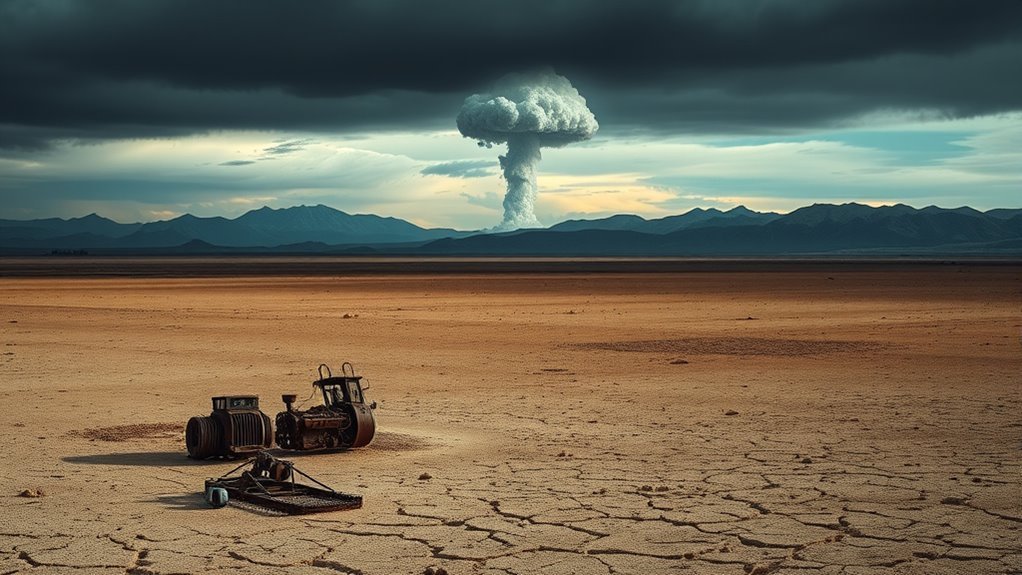
Although China began its nuclear weapons program in the mid-1950s with Soviet help, it quickly established critical facilities for uranium refinement, enrichment, and plutonium production by 1960. You’d see key nuclear infrastructure emerging in Baotou, Lanzhou, and Jiuquan, enabling the production of fissile material essential for weapon development.
With Soviet assistance fading by the early 1960s, China accelerated its nuclear development independently. On October 16, 1964, China conducted its first nuclear test, codenamed “596,” at Lop Nur, marking a major milestone in nuclear proliferation. Just three years later, you’d witness China testing its first hydrogen bomb, demonstrating rapid progress from fission to thermonuclear capability.
This swift advancement reflected China’s strategic urgency and commitment to establishing itself as a nuclear power.
China’s Current Nuclear Arsenal: Size, Delivery Systems, and Strategy
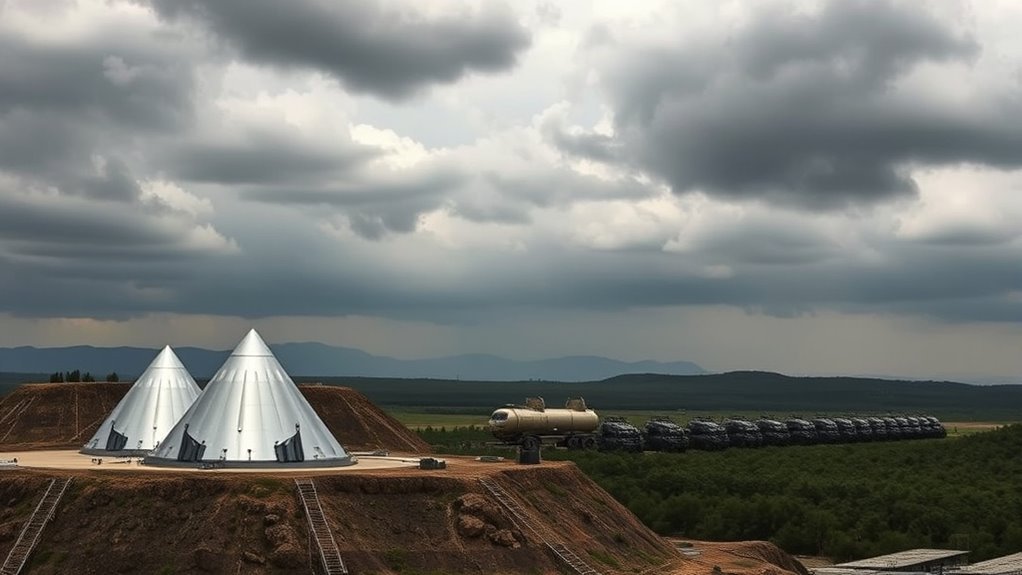
China’s early nuclear tests laid the groundwork for a steadily growing arsenal that now includes around 600 warheads as of 2025. You’ll find the Chinese nuclear arsenal centered on a mix of nuclear delivery systems that emphasize reliability and deterrence.
- Land-based ICBMs form the core, supported by expanding missile silos and mobile missile bases.
- Submarine-launched ballistic missiles operate from SSBNs, with the advanced Type 096 class under development.
- China maintains a strict no-first-use policy, underscoring its commitment to nuclear minimal deterrence.
- Air-launched platforms supplement the arsenal, though land-based systems remain most trusted.
This evolving nuclear deterrent balances modernization with strategic restraint, ensuring China’s nuclear warheads remain a credible threat while avoiding escalation.
Frequently Asked Questions
Who Is the Most Powerful Nuclear Country in the World?
Russia is the most powerful nuclear country in the world because it has the largest stockpile and advanced delivery systems.
While China’s arsenal is growing, it still trails behind Russia and the U.S. in overall strength.
Does Japan Have Nukes?
You won’t find Japan packing any “big fireworks” themselves—they don’t own nukes. Instead, they lean on their U.S. buddy’s protective shield, all while keeping peaceful energy ambitions tightly under control and following strict global rules.
Who Has 90% of the World’s Nuclear Weapons?
You’ll find that Russia and the United States hold about 90% of the world’s nuclear weapons.
Russia controls roughly 45%, the US about 38%, leaving other countries with far smaller arsenals.
Does China Have Nuclear Weapons That Can Hit the US?
Absolutely, China’s nuclear missiles can smack the US anytime! You’ve got intercontinental ballistic missiles like the DF-41 and submarine-launched JL-2s, all primed to reach US targets with devastating impact.
Don’t underestimate their reach!
Conclusion
You might be surprised to learn that China’s nuclear weapons program is no small feat—it’s a colossal force shaping global security. From its early tests to today’s sophisticated arsenal and delivery systems, China has built a powerful deterrent that commands attention.
Understanding this helps you grasp how vital China’s role is in maintaining the delicate balance of international peace, where every move can feel like walking on a razor’s edge. China’s nuclear capabilities are a key factor in global stability and the ongoing efforts to prevent nuclear conflict.