How Does a Starter Pistol Work?
When you hear a starter pistol’s loud bang, it instantly signals athletes to start the race together. This key function of a starter pistol ensures a fair and synchronized beginning to competitive events.
The sound travels through air and often connects to electronic timing systems, ensuring everyone moves at the same moment.
Blank pistols create real gunshots, while electronic ones simulate the sound for precise timing in elite events. This combination keeps the start fair and accurate.
If you want to know how different pistols work and why each is chosen, keep exploring.
Key Takeaways
- A starter pistol fires a loud sound to signal the official start of a race.
- The sound alerts athletes to react immediately and ensures simultaneous race commencement.
- Modern pistols connect to electronic timing systems for precise, synchronized starts.
- Blank pistols produce real gunshot sounds, while electronic pistols simulate the sound.
- Electronic starter pistols prevent sound delay advantages and enhance fairness in competitions.
How Does a Starter Pistol Signal the Start of a Race?
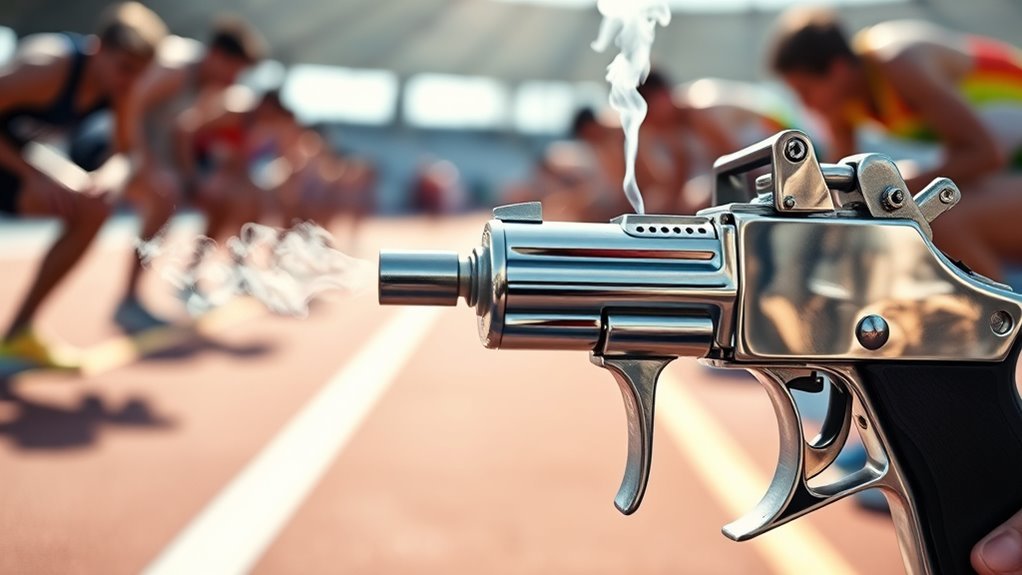
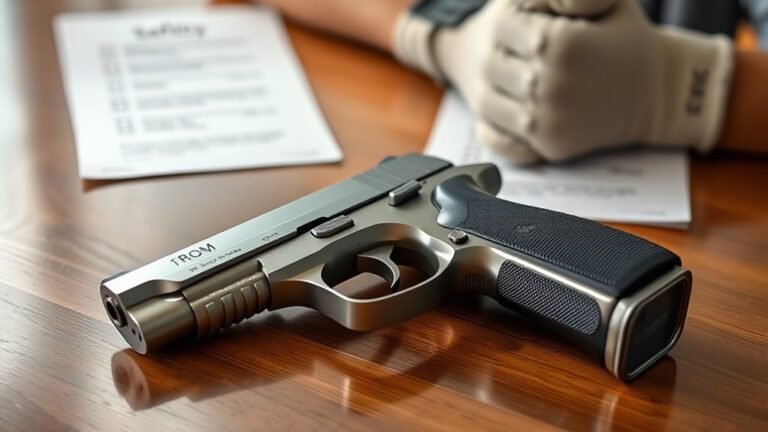
When the starter fires the pistol, you hear a loud sound that officially signals the race’s start. This signal is essential because it tells you and the other athletes to react immediately. Starting pistols produce a sharp noise that travels through the air to your ears, making sure you know exactly when to begin.
To guarantee fairness, modern systems don’t just rely on sound alone. Electronic timing connects directly to the pistol, sending an instant signal to the timing system. Speakers placed in each lane play the gunshot sound simultaneously, so no one gets an advantage from sound delay.
This combination of audible signal and electronic precision assures that all athletes start fairly and at the same moment.
Types of Starter Pistols: Blank, Electronic, and Their Uses
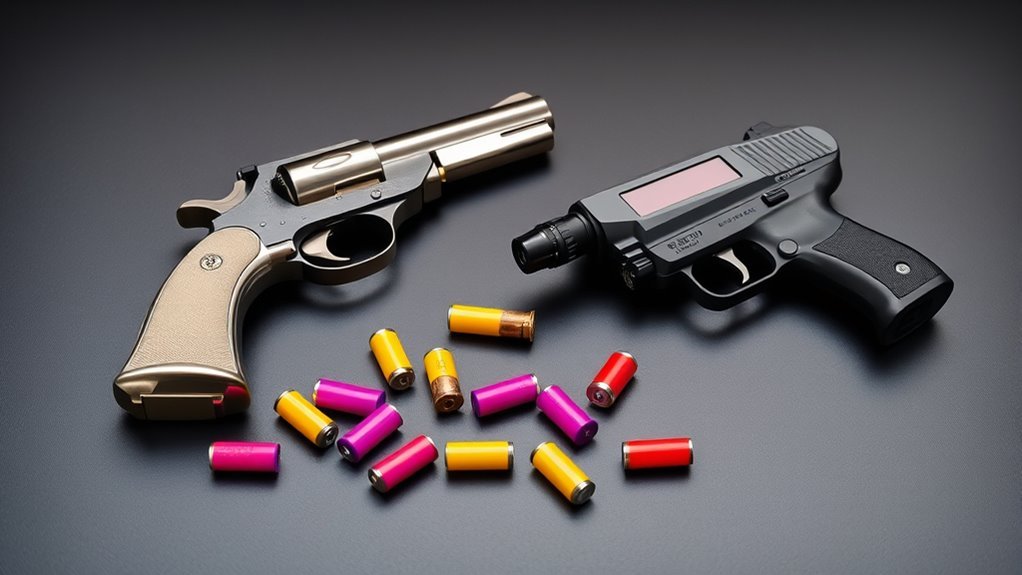
Although both blank and electronic starter pistols serve the same purpose—to signal the start of a race—they operate quite differently. When you use a gun at a race, you’ll notice these key distinctions:
Blank and electronic starter pistols both signal race starts but function in distinctly different ways.
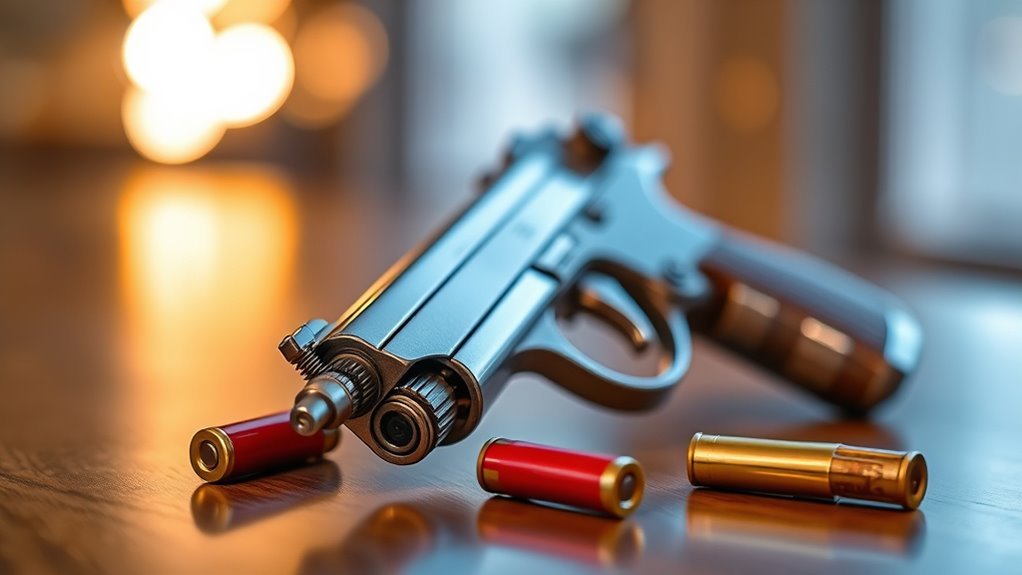
- Blank starter pistols fire blank cartridges, producing a loud, real gunshot sound.
- Electronic starter pistols create a simulated gunshot through speakers, avoiding actual gunfire.
- Blank pistols are typical for lower-level meets, while electronic ones are favored in elite competitions.
- Electronic starter pistols link directly to timing systems, ensuring all athletes start simultaneously.
Choosing between these depends on the competition’s level and need for precision. Just like a website uses cookies to improve your experience, electronic starters enhance fairness and consistency for every race.
Frequently Asked Questions
What Is the Difference Between a Starter Pistol and a Regular Pistol?
You’ll find starter pistols only fire blanks, creating noise without bullets, while regular pistols shoot live rounds. Starter pistols lack rifling and use simpler mechanisms, making them safer and meant solely for signaling, not self-defense or combat.
Do They Still Use Starter Pistols?
You’ll still see starter pistols crack the starting line’s silence like a thunderclap, especially in amateur meets.
While electronic systems rise, these classic blanks remain a trusted, regulated signal to launch the race with flair.
Do Starter Pistols Shoot a Projectile?
No, starter pistols don’t shoot projectiles. They fire blanks that create a loud noise to start races safely.
You’ll hear the bang, but nothing is actually fired toward anyone. It’s all about the sound.
Conclusion
Just like a conductor’s baton cues the orchestra to begin, a starter pistol signals the race’s explosive start. Whether it’s a blank or electronic type, the pistol’s sharp sound cuts through the air, sparking action and adrenaline.
Now that you know how these devices work, you can appreciate the precision behind every race’s kickoff. Next time you hear that crack, you’ll see it’s more than noise—it’s the heartbeat of competition, the essential signal that launches athletes into motion and defines the spirit of the race.