How Does a Pistol Safety Work Step by Step
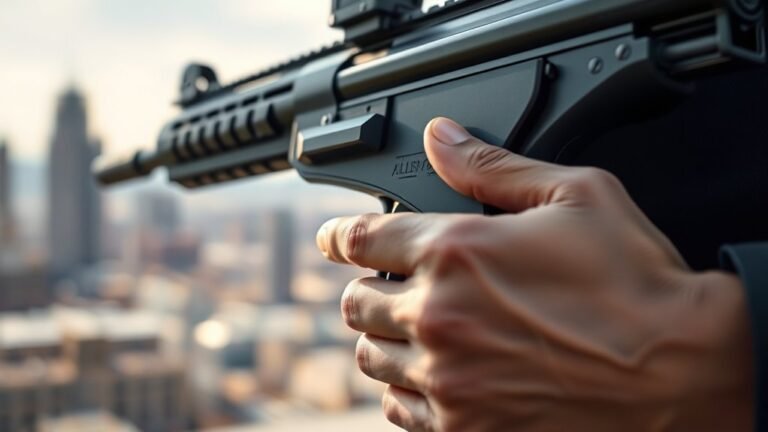
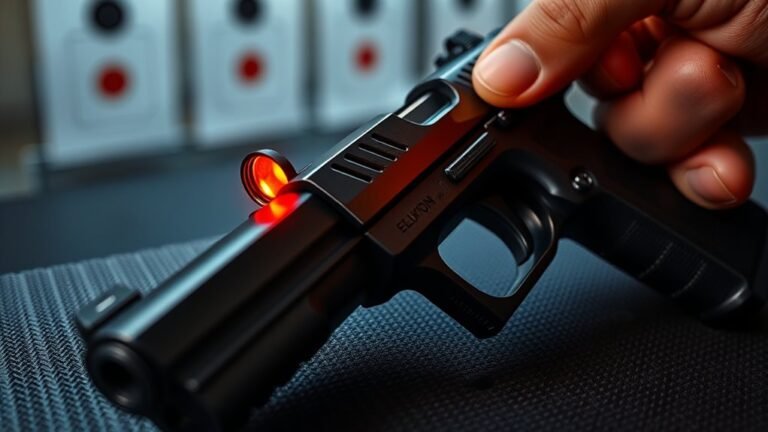
When you handle a pistol, its safety system works step by step to prevent accidental firing. This includes internal safeties like firing pin blocks and disconnectors that keep the gun from firing unless you pull the trigger fully.
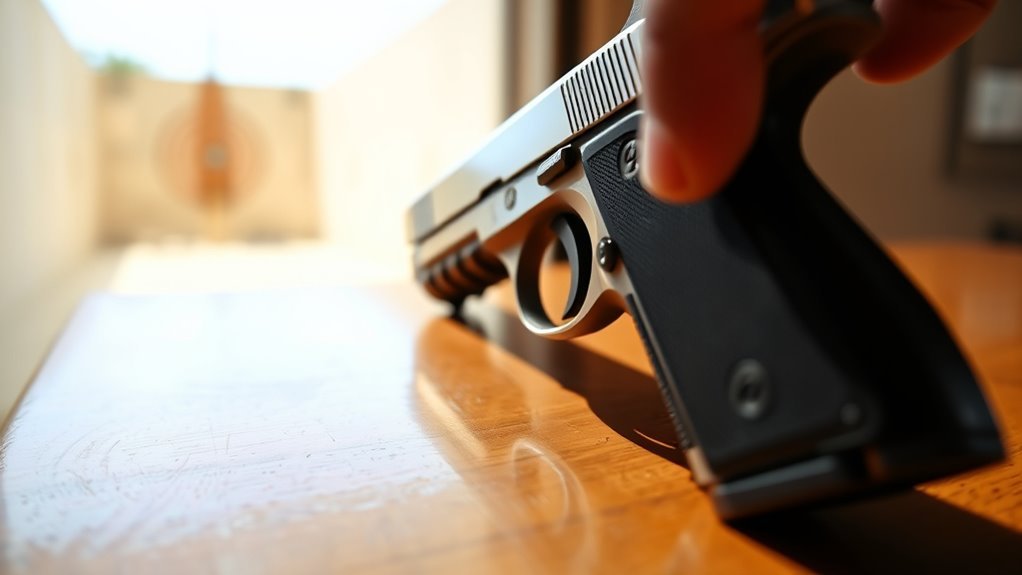
External safeties, such as manual switches or grip safeties, physically block firing unless intentionally disengaged.
Together, these features guarantee the pistol only fires when you want it to. If you want to understand each safety’s role in more detail, there’s more to explore.
Key Takeaways
- External safeties like manual levers physically block the trigger or firing pin to prevent accidental firing.
- Grip safeties require a firm handhold to disengage and allow the trigger to move.
- Internal safeties, such as firing pin blocks, only allow firing when the trigger is fully pressed.
- The disconnector ensures the pistol only fires when the slide is properly in battery.
- Decocking mechanisms safely lower the hammer without pulling the trigger to reduce accidental discharge risks.
How Pistol Safety Mechanisms Work
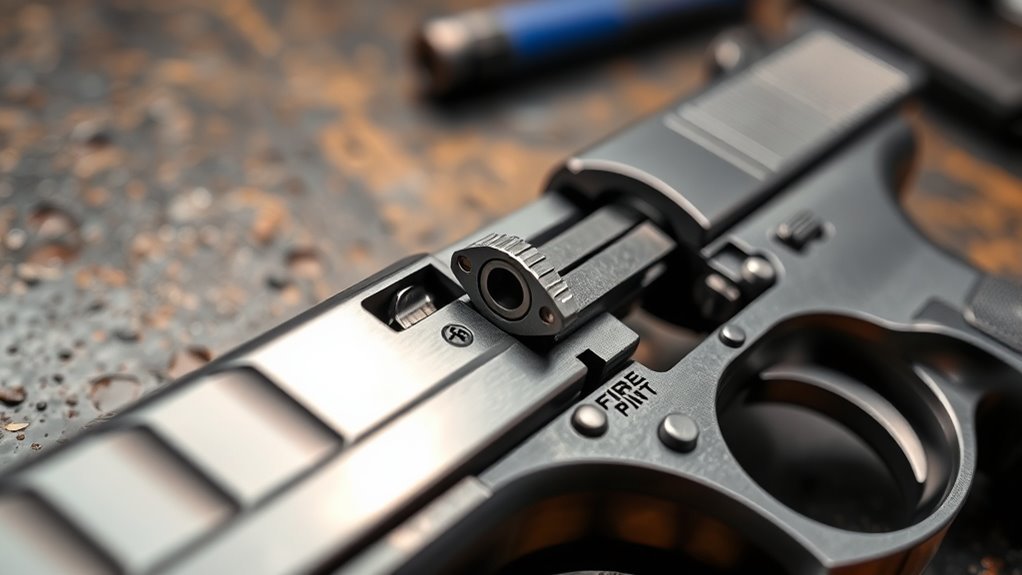
Although pistol designs vary, safety mechanisms all serve one main purpose: to prevent accidental discharge. When you handle a firearm, you rely on a combination of internal safeties and external safeties to keep it secure.
Internal safeties like the firing pin block and hammer safety prevent the gun from firing unless the trigger is deliberately pulled. The trigger safety, often integrated into the trigger itself, stops the trigger from moving unless you press it correctly.
Internal safeties ensure the gun fires only when the trigger is intentionally and correctly pressed.
External safeties, such as manual safety switches or levers, physically block the trigger or firing pin release when engaged. Additionally, the disconnector ensures the pistol only fires when the slide is fully in battery.
Together, these safety features work seamlessly to keep your firearm from discharging unintentionally.
Common Types of Pistol Safeties That Prevent Accidental Firing
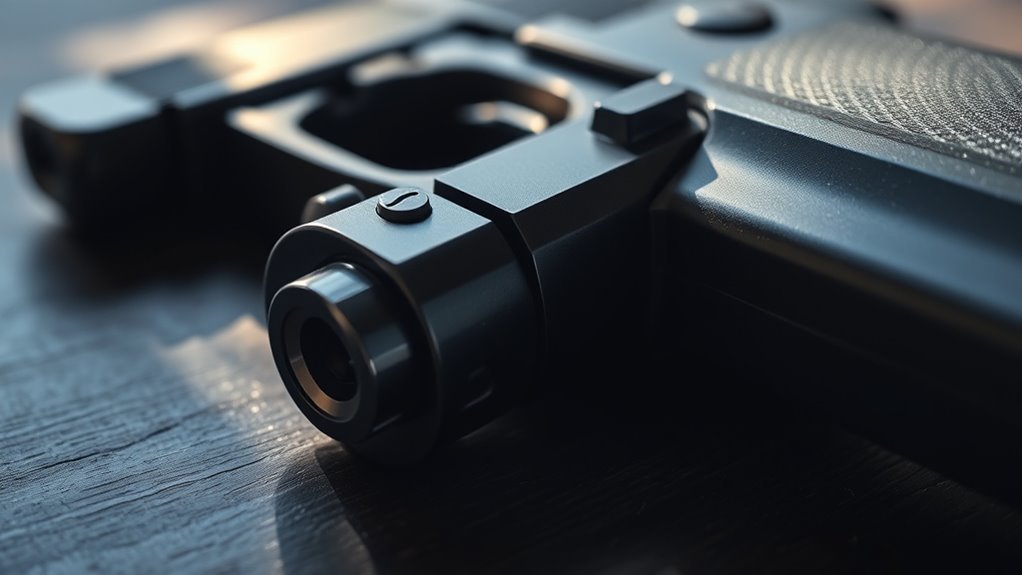
When you handle a pistol, understanding the common types of safeties can help you prevent accidental firing. These safety features fall into external and internal categories, each designed to keep you safe.
- Manual Safety & Safety Lever: External safety controls like switches or levers block the trigger or firing pin, preventing discharge unless disengaged.
- Grip Safety: This external safety requires a firm grasp to disengage, ensuring the pistol fires only when held properly.
- Decocking Mechanism: Allows you to safely lower the hammer without pulling the trigger, reducing accidental firing risks.
- Drop Safety (Firing Pin Block & Transfer Bar): Internal safeties prevent firing if the gun is dropped or jarred unexpectedly.
You’ll find trigger safeties integrated to deactivate the trigger unless pressed correctly, adding another layer of security.
Frequently Asked Questions
How Do Safeties on Pistols Work?
Pistol safeties prevent accidental firing by blocking trigger or firing components. You engage or disengage them manually or rely on automatic mechanisms that only let the gun fire when you intentionally pull the trigger or grip firmly.
What Are the 7 Rules of Gun Safety?
Think of gun safety like a dance—keep your firearm pointed safely, treat it as loaded, finger off the trigger, know your target, store securely, unload when not in use, and always stay aware.
You’ve got this.
What Are the 5 Gun Safety Rules?
You always treat every firearm as loaded, keep the muzzle pointed safely, keep your finger off the trigger until ready, be sure of your target and beyond, and store guns securely, unloaded, away from ammo to stay safe.
Can You Pull the Trigger With the Safety On?
You can sometimes pull the trigger with the safety on—like trying to use a rotary phone today.
It depends on the pistol’s design, so always check your firearm’s manual before assuming the trigger’s locked or free.
Conclusion
Understanding how a pistol safety works is like having a trusted guardian by your side—always ready to prevent accidental firing. By knowing the common types of safeties and how they function, you take control of your firearm’s security and your own peace of mind.
Remember, practicing proper safety habits isn’t just smart—it’s essential. Stay vigilant, respect your pistol, and let safety be your constant companion every time you handle it. Mastering pistol safety ensures both responsible use and protection for you and those around you.