Are Guns Safe in Homes?
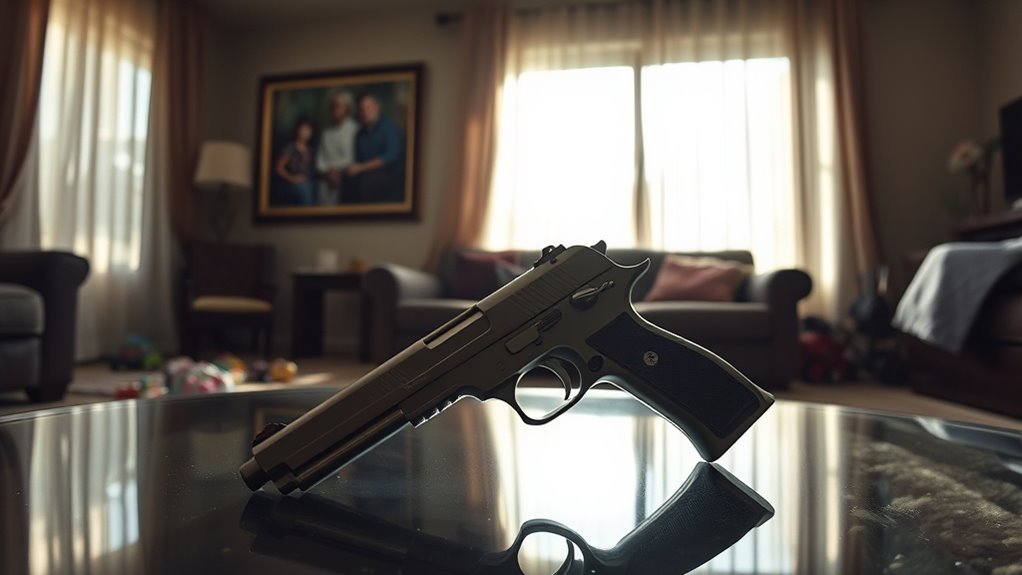
Guns can pose serious risks in your home, especially if you have kids. Firearm safety is crucial to prevent accidents.
Leaving firearms unsecured or loaded increases the chance of accidental shootings and injuries.
Properly storing guns unloaded, locked, and with ammunition kept separately helps protect your family.
Following safe handling practices and using safety devices considerably reduce dangers.
If you want to keep your home safe and lower the risk of tragic firearm accidents, it’s important to understand effective storage and safety measures.
Key Takeaways
- Unsecured guns in homes significantly increase the risk of accidental shootings, especially among children.
- Homes with firearms have nearly three times higher chances of firearm injuries and domestic violence deaths.
- Proper gun storage—unloaded, locked, and with ammunition stored separately—greatly enhances home safety.
- Safe handling practices, like keeping fingers off triggers and pointing guns safely, prevent many accidents.
- Supporting local safe storage laws and using safety devices reduce tragic firearm injuries in homes.
How Guns in Homes Put Kids and Families at Risk
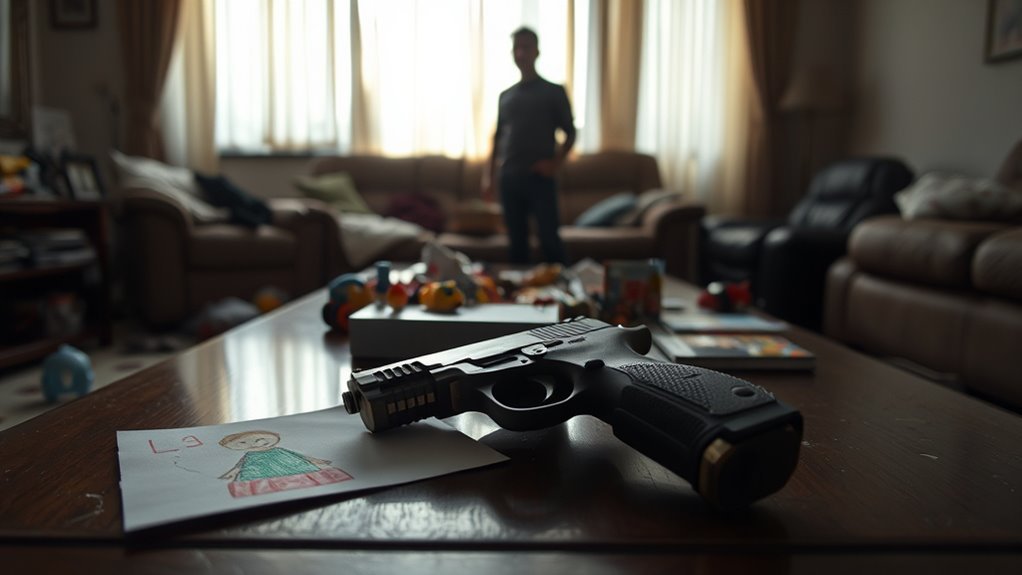
Because many gun owners leave their firearms unsecured, children in these homes face a serious risk of accidental shootings. You might not realize that over half of U.S. gun owners store guns unlocked, making it easy for children to gain gun access. This unsafe storage leads to more than 3,500 unintentional shootings by kids under 18 since 2015, causing over 1,200 gun deaths.
Your family’s risk increases because homes with guns are nearly three times more likely to experience firearm injuries or domestic violence-related deaths. Even toddlers can pull a trigger, turning unsafe storage into a deadly hazard.
Practicing proper gun safety isn’t just about preventing accidents—it’s about protecting everyone in your home from tragic firearm injuries and gun deaths linked to careless storage.
Gun Safety: How to Store and Handle Guns to Protect Children
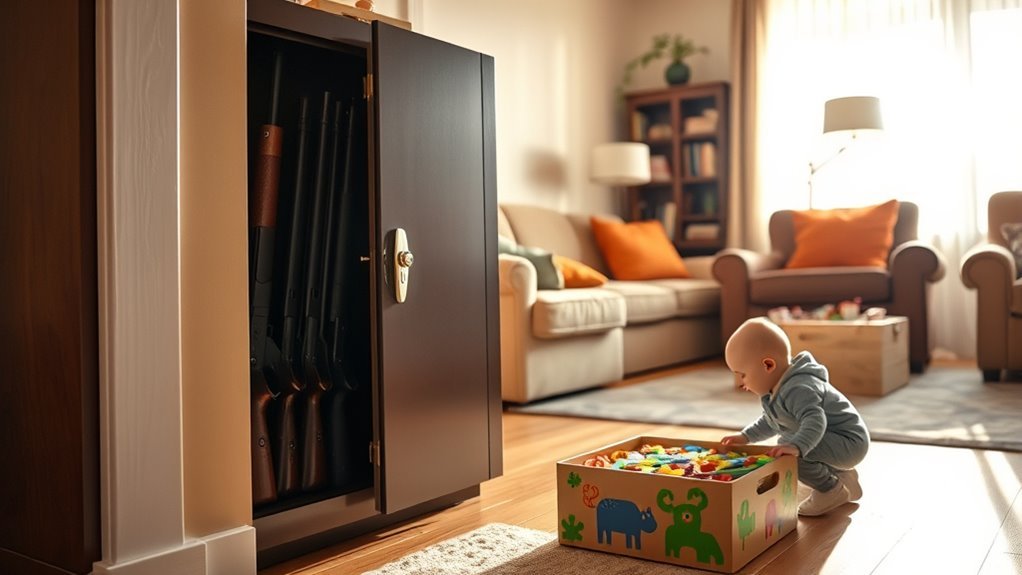
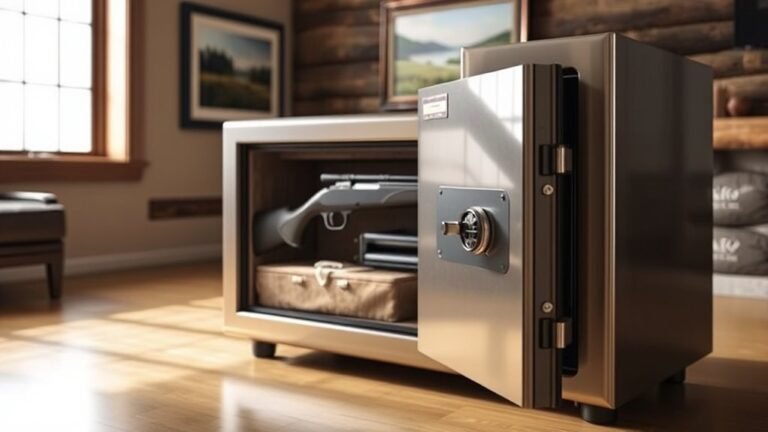
When you store and handle guns properly, you considerably reduce the risk of accidents involving children. To ensure gun safety, always store guns safely—unloaded and locked—in a secure safe or lockbox, with ammunition stored separately.
Keep keys or lock combinations out of children’s reach to prevent accidental discharge. Practice safe handling by pointing guns in a safe direction, keeping your finger off the trigger, and unloading guns before setting them down.
Support local safe storage laws and use safety devices like cable locks to further protect your family.
| Safe Storage Practices | Safe Handling Tips |
|---|---|
| Store guns unloaded and locked | Keep guns pointed in a safe direction |
| Ammunition stored separately | Finger off the trigger until ready |
| Use safety devices and follow laws | Unload guns before setting down |
Frequently Asked Questions
Is It Safer to Have a Gun in Your House?
It’s not inherently safer to have a gun in your house. Unless you store it securely—locked, unloaded, and separate from ammo—you increase risks like accidents, injuries, or worse.
This is especially true if children are around. Proper storage is crucial to reduce these dangers. Without it, having a gun can pose significant safety concerns.
Where Should You Put a Gun Safe in Your House?
Imagine Sarah locking her gun safe in a basement closet, out of kids’ reach. You should do the same—choose a discreet, locked spot, anchor the safe securely, and avoid windows or damp areas to protect your firearms.
This helps ensure safety and keeps your firearms in good condition. Remember, accessibility and security are both important when deciding where to place your gun safe.
What Is the Safest Gun to Have in Your Home?
The safest gun to have in your home is one unloaded, locked with a trigger or biometric lock, and stored separately from ammo.
Lever-action rifles or shotguns in safes are safer choices for home defense.
What Percent of Gun Accidents Happen in the Home?
Think of your home as a minefield—about 90% of gun accidents happen there. You’ll want to lock up firearms tightly because most unintentional shootings, especially involving kids, occur right inside your own house.
Stay safe!
Conclusion
When you bring a gun into your home, you’re not just adding protection—you’re adding responsibility. Think of it like a sleeping lion; it may seem safe until it’s not. To keep your kids and family safe, you must store and handle guns with the utmost care.
Remember, a locked and unloaded gun is your best defense against tragedy. Don’t let a moment’s carelessness turn your home into a danger zone.
Safe gun storage and responsible handling are essential. Prioritize these practices to ensure guns are safe in homes and protect what matters most.