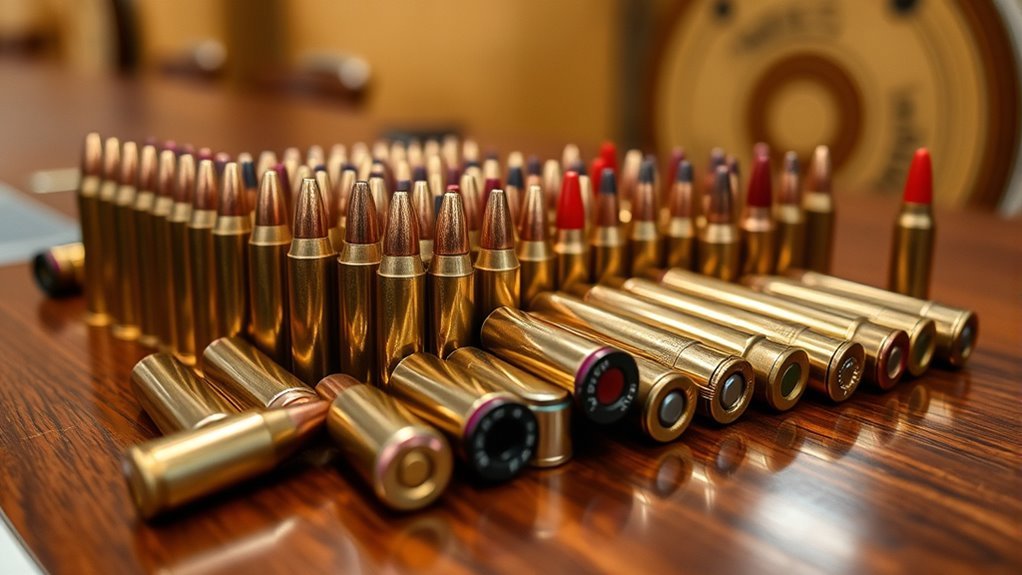
How to Identify Parts of Rifle and Pistol Cartridges
You can identify the main parts of rifle and pistol cartridges by looking at the metallic case, primer, powder charge, and projectile. These key components help you understand cartridge structure and function.
The primer sits at the case head and ignites the powder when struck.
Centerfire cartridges have the primer in the center; rimfire types have it in the rim. Check the markings stamped on the case base, like .308 or 9mm, to confirm caliber.
Understanding these basics helps you handle and store cartridges safely.
Keep exploring to learn about cartridge markings and further details. Familiarity with these parts enhances safe handling and usage of firearms.
Key Takeaways
- Identify the metallic case as the container holding the primer, powder, and projectile.
- Locate the primer at the cartridge base center (centerfire) or rim (rimfire).
- Recognize the powder charge inside the case that propels the bullet when ignited.
- Observe the projectile (bullet) at the case mouth, designed to travel through the barrel.
- Check cartridge markings on the case base for caliber and type identification.
Identify the Main Parts of Rifle and Pistol Cartridges
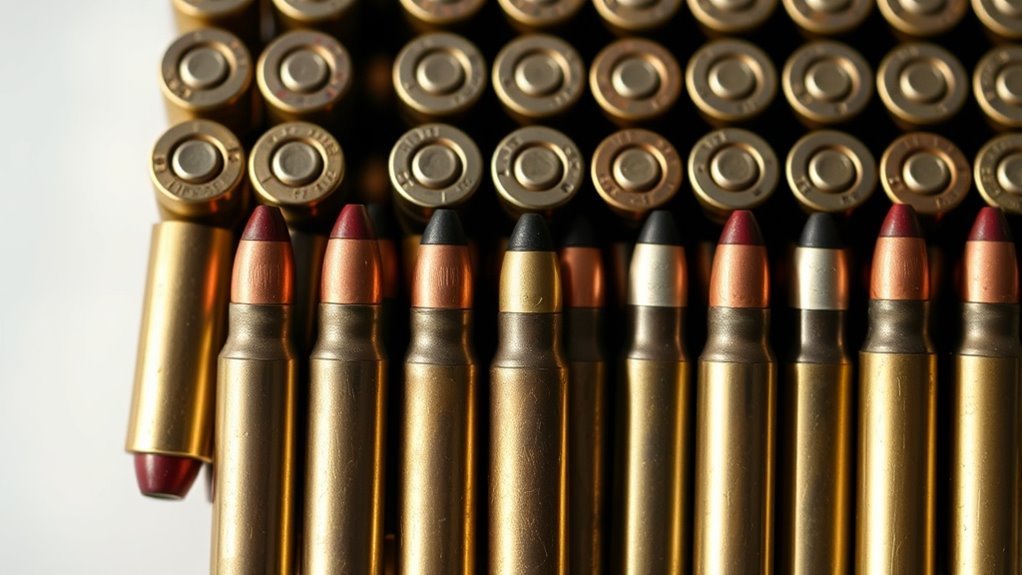
When you examine a rifle or pistol cartridge, you’ll notice several key parts working together. The cartridge consists of a metallic case, usually brass or nickel-coated brass, which holds the primer, powder charge, and projectile. At the case head, the primer sits ready to ignite when struck by the firing pin.
This ignition sets off the powder charge, rapidly producing gases that push the projectile forward through the end of the barrel. You’ll find two main types: centerfire cartridges, with the primer in the case center, and rimfire cartridges, where the primer is in the rim. Each component plays an essential role—without the primer’s spark, the powder won’t burn, and the projectile won’t leave the barrel.
Understanding these parts helps you identify and handle cartridges safely.
How to Read Rifle and Pistol Cartridge Markings
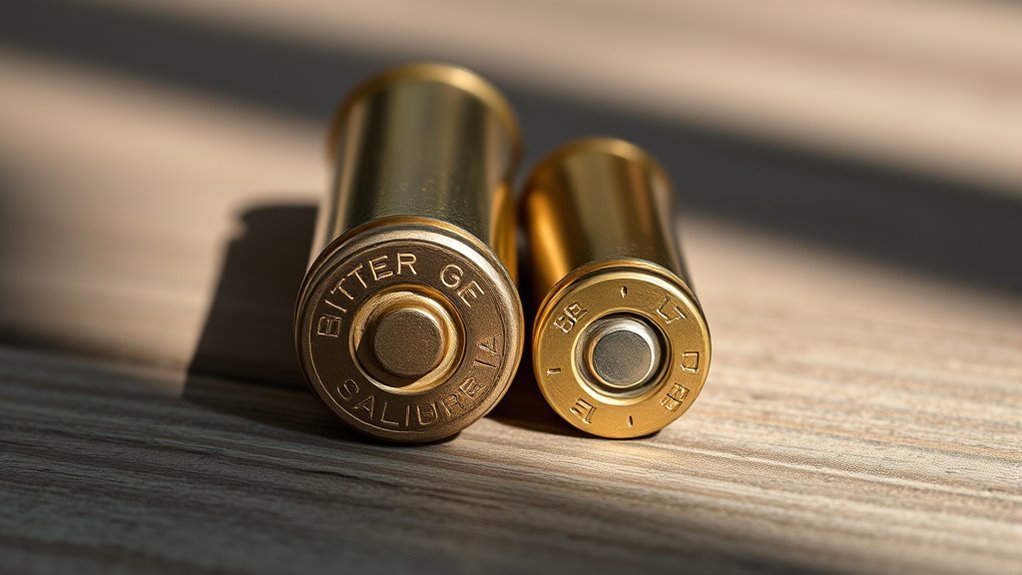
Although cartridge markings may seem small or worn, they provide essential information about the caliber or gauge of your rifle or pistol ammunition. Typically, the caliber is stamped on the cartridge case’s base or side, often as a headstamp showing measurements like .308 or 7.62x51mm, which indicate the cartridge’s dimensions.
Pistol cartridges might display calibers such as 9mm or .45 ACP. Shotgun gauges, like 12 or 20, appear on the receiver or barrel. For accurate identification, you can rely on these stamped markings or, if they’re unclear, consult the manufacturer’s specifications.
Using precise measurements with a caliper also helps confirm the cartridge’s size when markings are worn or missing, ensuring you properly identify your ammunition before use.
Frequently Asked Questions
Which Is Part of Both a Rifle and Pistol Cartridge?
You’ll find the case, primer, and projectile in both rifle and pistol cartridges. Each part plays a crucial role: the case holds everything, the primer ignites the powder, and the projectile is what hits the target.
How to Identify Gun Parts?
You examine markings, you study diagrams, you handle parts to identify gun components. You learn how each piece fits, functions, and interacts.
You consult manuals, ask experts, and practice regularly to confidently recognize every firearm part.
What Are the Three Major Parts of a Firearm, Pistol, Revolver, and Rifle?
You’ll find the three major parts of any firearm—pistol, revolver, or rifle—are the barrel, frame (or receiver), and firing mechanism.
Each plays an essential role in aiming, housing components, and firing the cartridge safely.
What Are the 4 Parts of a Rifle Cartridge?
You’ll find four parts in a rifle cartridge: the case, which holds everything; the projectile, or bullet; the propellant, which creates gas pressure; and the primer, which ignites the propellant when struck by the firing pin.
Conclusion
Now that you know how to identify the main parts of rifle and pistol cartridges and read their markings, you’ll spot patterns that seem to line up almost by chance. It’s like the bullet’s story is waiting for you to decode it, every time you handle a cartridge.
So next time you pick one up, you’ll not only recognize its parts but also appreciate the coincidence of design and function working perfectly together. This understanding deepens your knowledge of cartridge components and their purpose. Identifying parts of rifle and pistol cartridges becomes more intuitive with practice.