5 Tips to Keep Your Gun Safe and Accessible
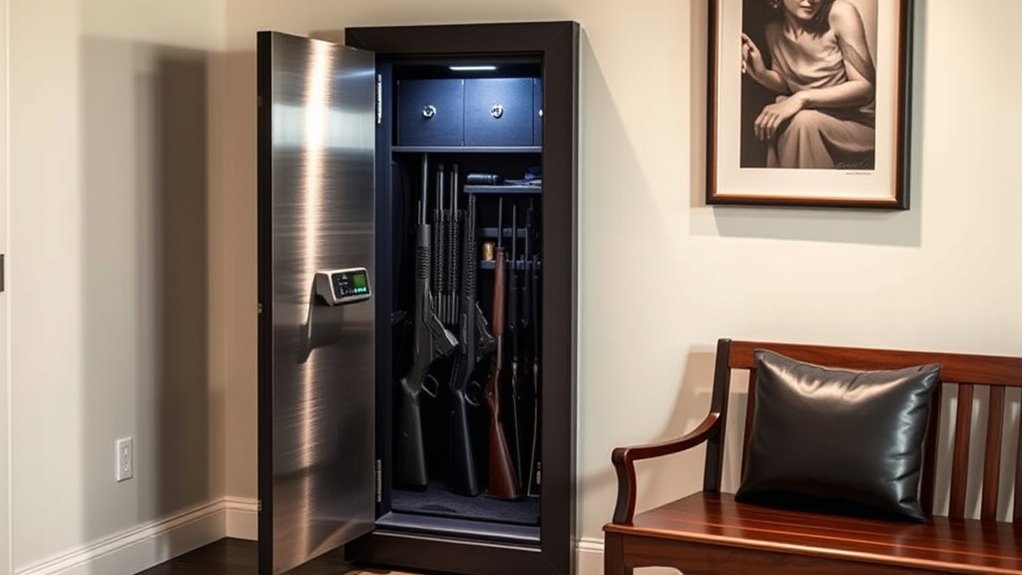
To keep your gun safe and accessible, choose a biometric safe that balances security with fast entry. This approach ensures your firearm is protected while allowing quick access when needed.
Always store firearms unloaded and keep ammunition locked separately for added safety.
Use multiple locking devices like trigger locks inside your safe to create layered protection. Regularly change your safe’s access codes and avoid obvious combinations to enhance security.
Finally, educate your family on safe storage and quick access procedures.
Following these steps sets a solid foundation, and there’s more to discover for enhancing your gun safety.
Key Takeaways
- Choose a biometric or electronic gun safe with quick-entry features for fast and secure access during emergencies.
- Store firearms unloaded and keep ammunition in separate, locked containers to prevent accidents and unauthorized use.
- Use multiple locking devices, such as combining safes with trigger locks, to enhance security and comply with safety laws.
- Regularly update safe access codes every 3-6 months and avoid sharing them with untrusted individuals.
- Teach family members safe storage practices and how to properly use biometric safes and trigger locks.
Choose a Gun Safe That Balances Quick Access and Security
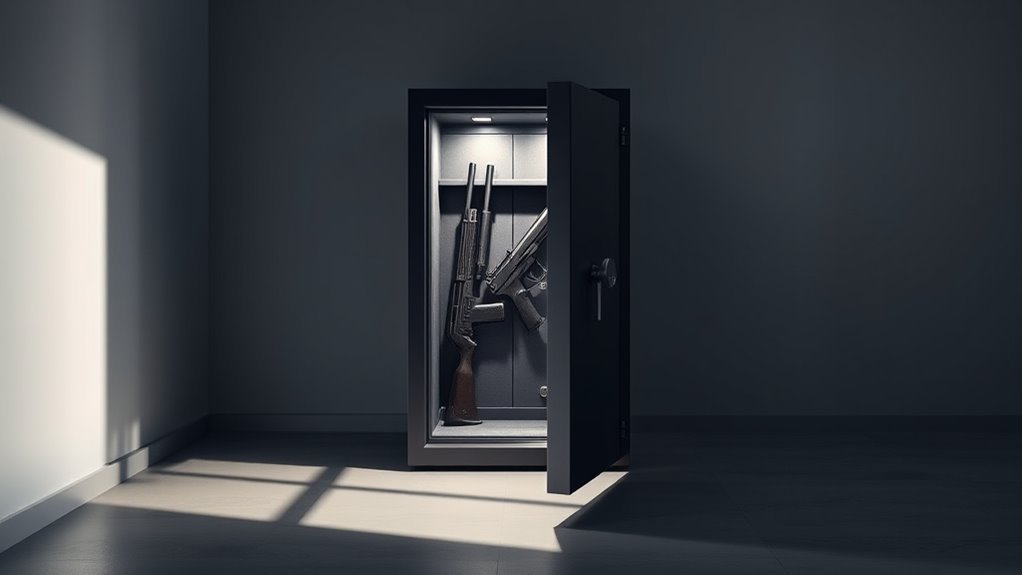
While you want your gun safe to provide quick access in emergencies, it’s essential to balance speed with security. Biometric safes offer rapid access, often opening within seconds, so you can reach your firearm without delay. These safes enhance firearm security by using fingerprint recognition, reducing the risk of unauthorized use.
Opting for safes with electronic or biometric locks markedly reduces retrieval time compared to traditional keys or combinations. Additionally, locking safes that can be bolted down add another layer of theft protection without sacrificing quick access. Choosing a safe designed with quick-entry features ensures you’re prepared for emergencies while keeping your firearms secure from unauthorized hands.
Prioritizing both quick access and security helps you stay safe and ready.
Store Firearms Unloaded and Keep Ammunition Separate
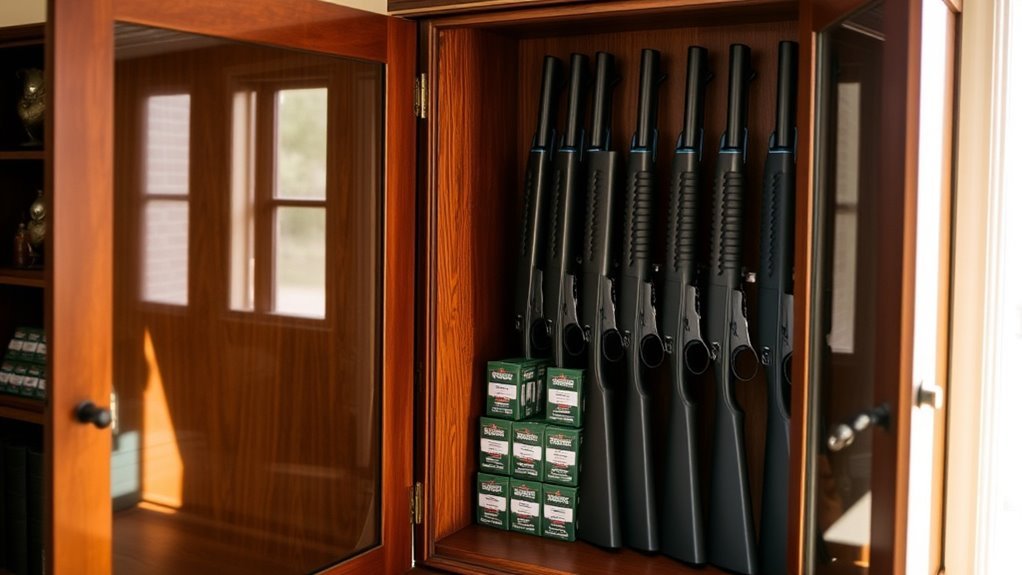
Because accidental discharges can cause serious harm, you should always store firearms unloaded and keep ammunition in a separate, locked location. This practice greatly reduces the risk of unauthorized use and prevents youth firearm injuries and suicides.
Storing firearms unloaded and ammunition locked separately prevents accidents and reduces unauthorized use.
To maintain safety:
- Store all firearms unloaded in designated safes or lockboxes to guarantee secure storage.
- Keep ammunition separately in clearly labeled, locked containers to limit access.
- Regularly check that firearms remain unloaded and ammunition is securely stored.
Use Multiple Locking Devices to Improve Gun Safety
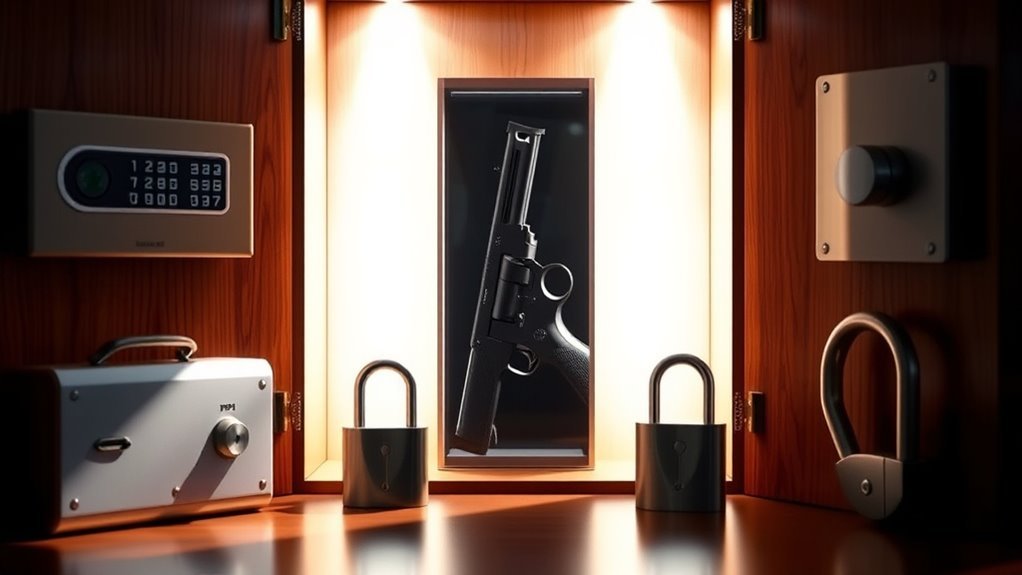
When you combine multiple locking devices, such as a gun safe with trigger locks, you substantially boost your firearm’s security and lower the risk of unauthorized access. Using multiple locks creates layered protection that makes it much harder for children, intruders, or unauthorized users to access your firearms. This approach not only improves firearm safety but also helps you abide by secure storage laws in many states.
For instance, pairing a biometric safe with interior trigger locks ensures quick access for you while keeping the gun inaccessible to others. Studies show that firearms stored with more than one safety device see a 78% reduction in youth firearm injuries. By employing multiple locks, you’re taking a smart, responsible step to keep your firearms both safe and accessible.
Keep Your Safe Secure and Change Codes Regularly
How often do you update your gun safe’s combination? Keeping your safe secure means regularly changing your access codes to minimize the risk of unauthorized entry. Avoid using obvious numbers like birthdays or simple sequences.
Regularly update your gun safe’s combination and avoid obvious codes to enhance security and prevent unauthorized access.
Instead, choose unique codes only trusted individuals know. To keep your safe secure, follow these steps:
- Set reminders to change your codes every three to six months.
- Use your safe’s programmable lock feature to easily update access codes.
- Limit sharing your new codes to essential, trusted people only.
Teach Your Family How to Store Guns Safely and Accessibly
Updating your safe’s codes is just one part of keeping your firearms secure. To guarantee effective gun safety, you need to focus on family education about secure storage. Teach your family to store guns unloaded and separate from ammunition to prevent accidents.
Show them how to use secure storage options like biometric safes or trigger locks, which balance safety with quick access for lawful owners. Keep keys or access codes out of children’s reach and avoid predictable combinations to stop unauthorized use.
Regularly review and practice these safe storage procedures together so everyone knows how to access firearms safely when necessary. Encouraging open communication about gun safety helps maintain a secure environment while keeping your firearms accessible to responsible family members.
Frequently Asked Questions
What Is the 3-3-3 Rule in Self-Defense?
The 3-3-3 rule means you keep your firearm secured but accessible within three seconds, for three minutes, in emergencies.
You’ll practice drawing it quickly while ensuring it stays safe from unauthorized access.
What Are the 7 Rules of Gun Safety?
You follow the 7 rules of gun safety by treating every gun as loaded, keeping your finger off the trigger, and never pointing it at anything unintended.
Store it securely unloaded and separate ammunition. Know your target, and always control the muzzle direction.
What Are the Four Golden Rules of Gun Safety?
Think of your gun like a dragon’s flame—never point it at what you don’t want burned, always assume it’s alive,
keep your finger off the spark, and only release when you’re truly ready.
What Gun Safes to Stay Away From?
You should stay away from lightweight, inexpensive safes, ones with default or easy codes, flimsy materials, or no anchoring options.
Also, avoid complicated locks that slow you down during emergencies—choose security and quick access instead.
Conclusion
Remember, “an ounce of prevention is worth a pound of cure.” By choosing the right safe, storing guns unloaded with ammo separate, and using multiple locks, you’re taking smart steps to keep your firearms both secure and accessible.
Regularly updating codes and teaching your family proper storage guarantees everyone stays safe. Taking these precautions now means peace of mind later, letting you handle your firearms responsibly without compromising security or quick access.
Incorporating these tips will ensure your gun remains safe and accessible, providing both protection and convenience whenever you need it.