How Fast Does a Pistol Bullet Travel: Measuring Methods
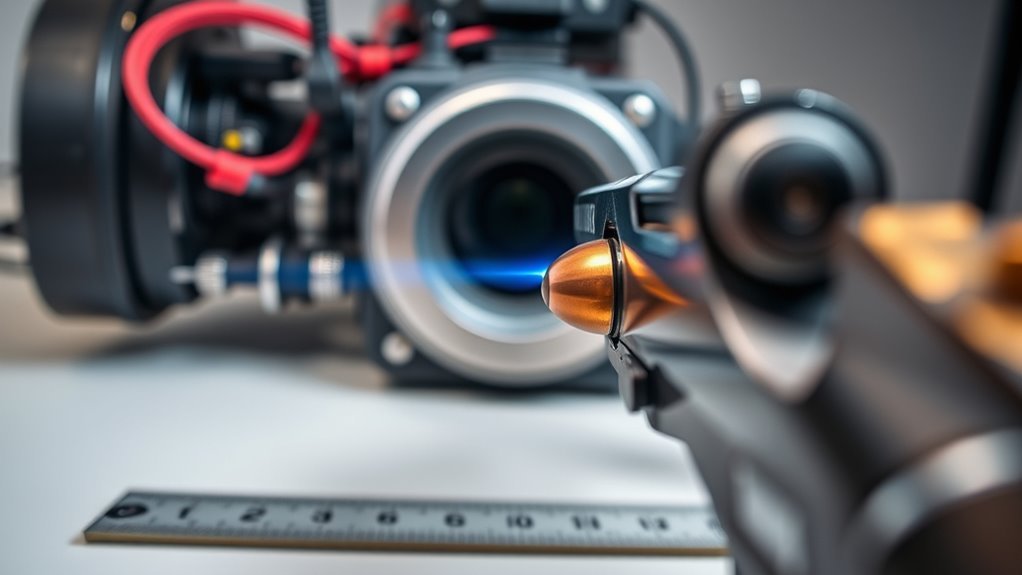
You can measure how fast a pistol bullet travels by using a chronograph, a device designed to time the bullet as it passes between two sensors set a known distance apart.
This method provides precise velocity readings essential for understanding ballistic performance.
Place the sensors level and stable, either at the muzzle or downrange, ensuring there is no light interference for accurate results. Proper setup is crucial to avoid errors in measurement.
Bullet speed typically ranges from 700 to over 1,500 feet per second, influenced by factors like barrel length, bullet weight, and powder type.
Keep exploring to understand what affects velocity and accuracy.
Key Takeaways
- Pistol bullet speed is measured using a chronograph with two sensors spaced a known distance apart to time the bullet’s passage. Sensors must be positioned level, stable, and with an unobstructed line of fire for accurate velocity readings.
- Typical pistol bullet velocities range between 700 and over 1,500 feet per second, depending on cartridge type. Minimizing ambient light interference and stabilizing the chronograph enhances sensor accuracy during measurement.
- Consistent setup and proper sensor placement yield reliable data for assessing pistol bullet speed and performance.
How to Measure Pistol Bullet Speed With a Chronograph
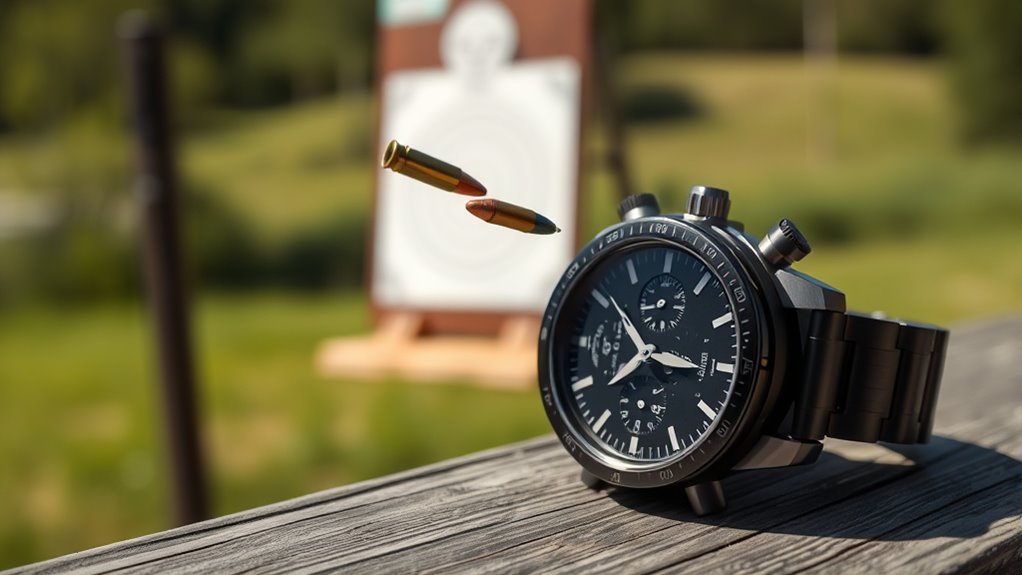
When you want to measure pistol bullet speed, using a chronograph is one of the most reliable methods. This device uses two sensors spaced a known distance apart to time the bullet’s passage, allowing it to calculate muzzle velocity in feet per second (fps). To get accurate readings, you need to guarantee proper setup by placing the chronograph’s sensors at the muzzle or a specific distance downrange with a clear, unobstructed line of fire.
Make sure the chronograph is level and stable to avoid errors during measurement. Also, minimize external light interference, as it can affect sensor performance. By following these steps, you’ll obtain precise velocity data, typically ranging from 700 fps to over 1,500 fps, depending on the pistol cartridge you’re testing.
Factors Affecting Pistol Bullet Velocity and Accuracy
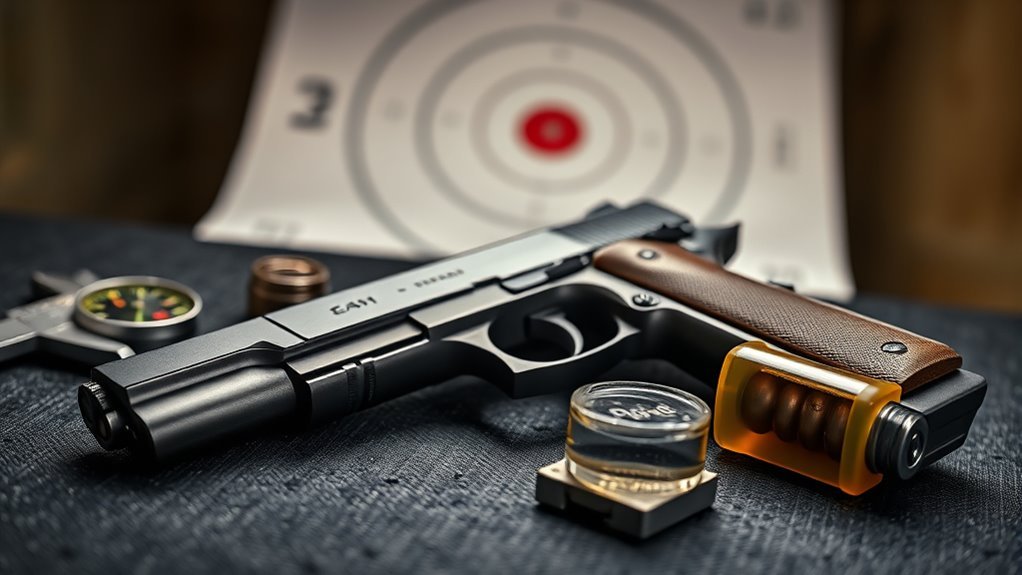
Because several elements interact to influence how fast and accurate a pistol bullet travels, understanding these factors helps you enhance performance. Key contributors include barrel length, which affects muzzle velocities by allowing powder gases more time to accelerate the bullet. Bullet weight also matters; lighter bullets achieve higher speeds but may be more affected by air resistance and have different ballistic coefficients.
Several factors like barrel length and bullet weight crucially influence pistol bullet speed and accuracy.
Powder type and amount determine initial pressure and velocity consistency.
To maximize velocity and accuracy, focus on:
- Matching rifling twist rate to bullet weight for stable spin and trajectory.
- Choosing appropriate powder type and charge for consistent muzzle velocity.
- Accounting for environmental factors like temperature, humidity, and wind that impact bullet flight.
Balancing these ensures the bullet exits the muzzle with superior speed and precision.
Frequently Asked Questions
What Is the 3-3-3 Rule in Self-Defense?
The 3-3-3 rule in self-defense means you should shoot three times within three seconds at a target three yards away, focusing on quick, accurate shots to stop a threat effectively and minimize your exposure during close encounters.
This approach emphasizes speed and precision, ensuring that you can neutralize the threat efficiently.
What Is the 26 Pistol Rule?
Imagine a bullet zipping through the air at around 700 to 1,200 fps—that’s the 26 Pistol Rule. It helps you estimate typical pistol bullet speeds, factoring in caliber, barrel length, and powder charge for safer shooting.
Can You Hear Gunshots 3 Miles Away?
Yes, you can hear gunshots up to three miles away under ideal conditions. Quiet, open environments help sound travel farther, but factors like wind, obstacles, and background noise can reduce how far you actually hear the shot.
How Long Does It Take for a Bullet to Travel 2 Miles?
It takes about 1.5 to 2 minutes for a bullet traveling at 1,500 fps to cover 2 miles.
But since pistol bullets slow down quickly, they rarely make it that far before dropping or losing power.
Conclusion
You’ll feel like a bullet expert once you measure pistol speed with a chronograph—it’s almost like having superpowers! Knowing how fast a bullet travels isn’t just cool; it’s essential for accuracy and safety.
Don’t let factors like temperature or ammo type catch you off guard; mastering these details can turn you into a sharpshooting legend.
So grab that chronograph and start measuring—your precision and confidence will skyrocket faster than any bullet! Understanding how fast a pistol bullet travels is key to improving your shooting skills and ensuring safe firearm use.